각 기능이 실제로 어떻게 작동하는지.How each feature actually works.
검증된 후기 뒤에 있는 원리, 후기를 믿을 수 있게 지켜 주는 확인 장치, 그리고 보증금과 계약서를 대신 읽어 주는 도구를 소개합니다.The details behind verified reviews, the checks that keep them trustworthy, and the tools that read your deposit and your contract.
자유 서술이 아닌, 구조화된 사실.Structured facts, not a free-text box.
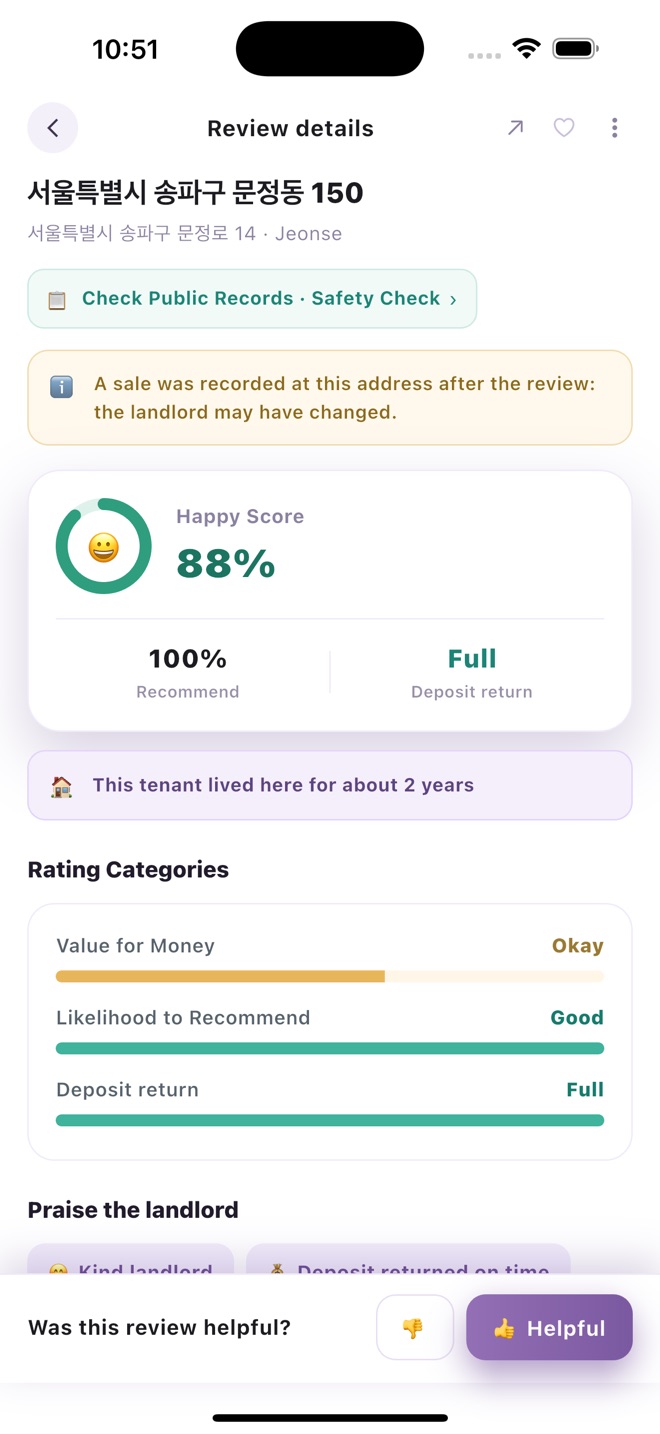
JiiBE 후기에는 자유롭게 쓰는 댓글 칸이 없습니다. 모든 후기는 정해진 항목의 구조화된 입력으로 구성되므로, 읽는 내용이 일관되고 집끼리 비교할 수 있으며, 비방이나 인신공격으로 변질될 수 없습니다. 후기를 게시하려면 먼저 세입자가 본인의 계약서를 업로드하고 AI가 주소와 임차 사실을 확인하므로, 실제로 그 집에 살았던 사람만 후기를 남길 수 있습니다. 계약서는 이 확인에만 사용된 뒤 즉시 파기되며, 저장되지 않습니다.A JiiBE review has no open comment field. Every review is assembled from specific, structured inputs, so what you read is consistent, comparable across homes, and cannot turn into a rant or a personal attack. Before a review can be published, the renter uploads their own lease and the AI confirms the address and the tenancy, so only people who genuinely lived there can post. The lease is used only for that check and is then immediately destroyed, never stored.
세입자는 다음과 같은 정해진 질문에 답합니다.The renter answers a fixed set of questions, including:
후기는 최신이고 공정할 때에만 도움이 됩니다.A review is only useful if it is current and fair.
두 가지 장치가 시간이 지나도 상황을 정직하게 유지합니다. 하나는 집의 주인이 바뀌었을 때를 위한 것이고, 다른 하나는 임대인이 후기에 이의를 제기할 때를 위한 것입니다.Two mechanisms keep the picture honest over time: one for when a home changes hands, and one for when a landlord disagrees.
새 임대인이 이전 소유주의 평판을 그대로 물려받아서는 안 됩니다. JiiBE는 각 건물의 공개된 실거래가 기록을 확인하고, 후기가 작성된 뒤에 매매가 이루어진 경우 그 매매 이전의 후기를 오래된 정보일 수 있다고 명확히 표시합니다. 독자는 이 집이 이제 다른 관리 주체에게 넘어갔을 수 있다는 점을 곧바로 알 수 있습니다.A new landlord should not inherit the last owner's reputation. JiiBE checks public real-transaction records for each building, and when a property is sold after a review was written, reviews from before that sale are clearly marked as possibly out of date. A reader immediately sees that the home may now be under different management.
임대인의 목소리도 막지 않습니다. 임대인은 부정확하다고 판단되는 후기에 대해 공식적으로 이의를 제기할 수 있습니다. 이의 제기는 검토를 거치며, 후기가 그대로 유지되든, 수정되든, 철회되든 그 결과가 해당 매물에 반영됩니다. 세입자는 정직한 경험을 보고, 임대인은 공정하게 대응할 방법을 가집니다.Owners are not silenced. A landlord can formally contest a review they believe is inaccurate. The dispute is reviewed, and the outcome is reflected on the listing, whether the review stands, is corrected, or is withdrawn. Renters see honest experiences, and owners have a fair way to respond.
모든 조항을 한국 임대차법에 비추어 읽습니다.Every clause, read against Korean rental law.
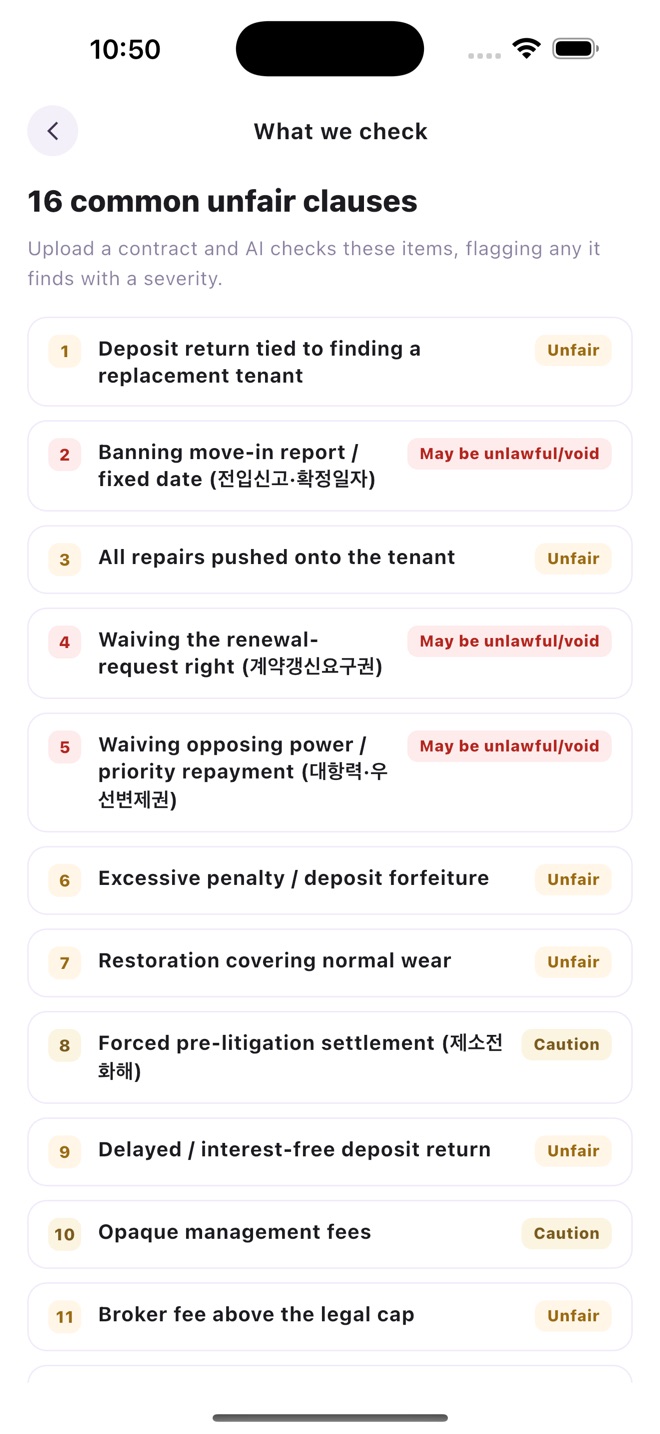
부동산에서 계약서에 서명하기 전에 계약서를 업로드하면, AI가 한국 임대차 계약에서 흔히 불공정하거나 위법한 16가지 조항 유형에 비추어 검토합니다. 이 체크리스트는 주택임대차보호법에 근거하며, 이 법에 따라 세입자를 법이 허용하는 것보다 불리하게 만드는 특약사항은 무효입니다.At the agency, before you sign, upload the lease and the AI reads it against 16 clause types that are commonly unfair or unlawful in Korean rental contracts. The checklist is grounded in the Housing Lease Protection Act, under which any special term that leaves a tenant worse off than the law allows is void.
각 지적 사항에는 위험도와 함께 무엇을 따져 보아야 하는지에 대한 쉬운 설명이 딸려 있습니다. 계약서는 분석된 뒤 즉시 파기되며, 저희 서버에 저장되지 않습니다. 이는 참고용 정보이며 법률 자문을 대체하지 않습니다.Each finding comes with a severity and a plain explanation of what to question. The contract is analyzed and then immediately destroyed, never stored on our servers. It is informational, and not a substitute for legal advice.
후기 검증, 서명 전 계약서 확인, 분쟁 뒷받침 등 어떤 목적으로 업로드한 계약서나 임대차 계약서든, 그 한 가지 작업을 위해서만 읽힌 뒤 즉시 파기됩니다. 서비스 제공자인 JiiBE는 회원님의 개인 문서를 보관하거나 열람하지 않으며, 접근할 수도 없습니다. 또한 분석 과정에는 성명이나 신분증 번호 같은 개인정보를 결과에 절대 출력하지 않도록 지시하고 있습니다.Any lease or contract you upload, whether to verify a review, check a contract before signing, or support a dispute, is read only to do that one task and is then destroyed on the spot. JiiBE, as the service provider, never keeps, reviews, or has access to your private documents. The analysis is also instructed never to output personal details such as names or ID numbers.
JiiBE는 저장소와 앱 기능을 한국(서울)에서 운영합니다. 국외로 전송되는 유일한 데이터는 회원님이 AI 분석을 위해 제출한 문서뿐이며, 이 문서는 처리 후 곧바로 파기됩니다.JiiBE runs its storage and app functions in Korea (Seoul). The only data sent abroad is the document you submit for AI analysis, which is processed and then destroyed right away.
보증금을 실제 시세 데이터에 비추어 확인하세요.Read the deposit against real market data.
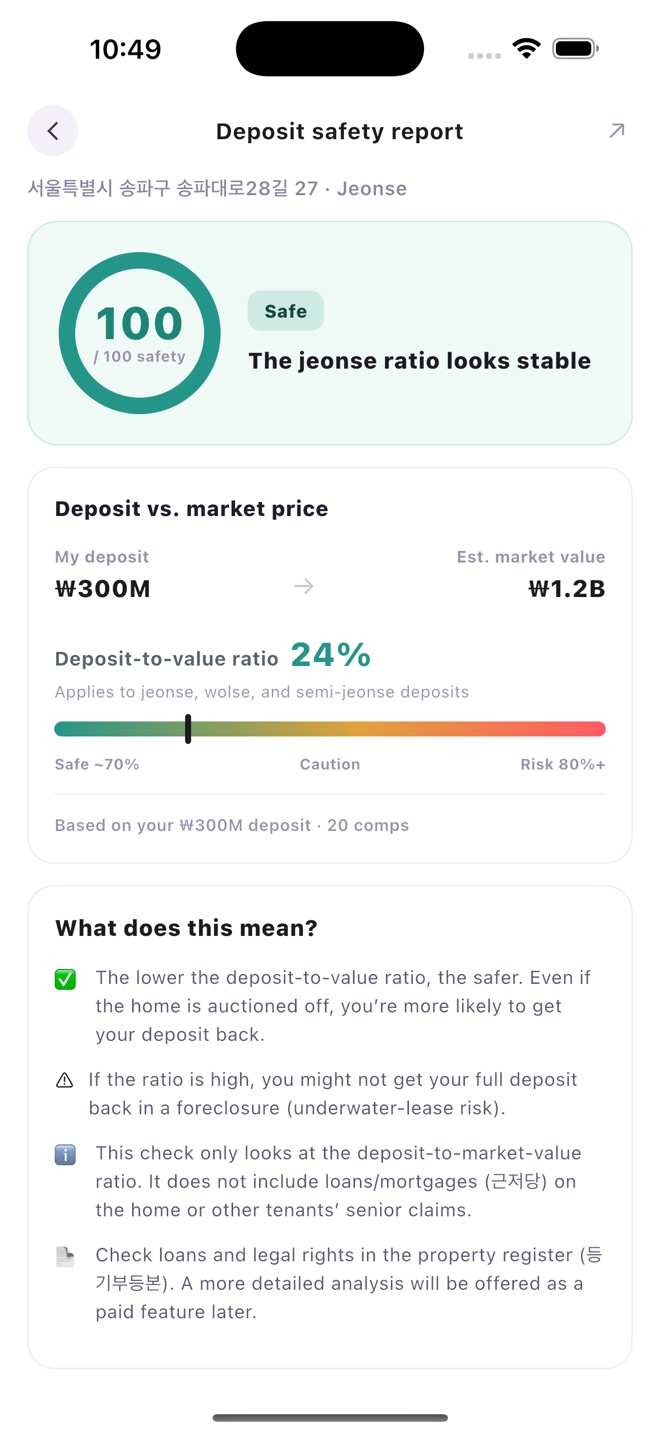
보증금을 잃는 것은 세입자가 마주하는 가장 큰 위험입니다. 주소를 입력하면 JiiBE가 공개된 실거래가 기록을 바탕으로 그 집의 시세를 추정하고, 이를 보증금과 비교해 깡통전세 위험을 가늠합니다.Deposit loss is the single biggest risk renters face. Enter an address and JiiBE estimates the home's market value from public real-transaction records, then compares it to the deposit to gauge underwater-lease risk, known in Korea as 깡통전세.
전세가율이 높다는 것은, 집이 경매로 넘어갈 경우 보증금 전액을 돌려받지 못할 실질적 가능성이 있다는 뜻입니다. 이 확인은 공개 데이터와 거주자 후기를 활용하며, 무료이고, 계정 없이도 이용할 수 있습니다.A high deposit-to-value ratio means a real chance of not recovering the full deposit if the property is auctioned. The check draws on public data and resident reviews, is free, and needs no account to run.
단계별 가이드, 중요한 순간에는 알림까지.A step-by-step guide, with reminders where it counts.
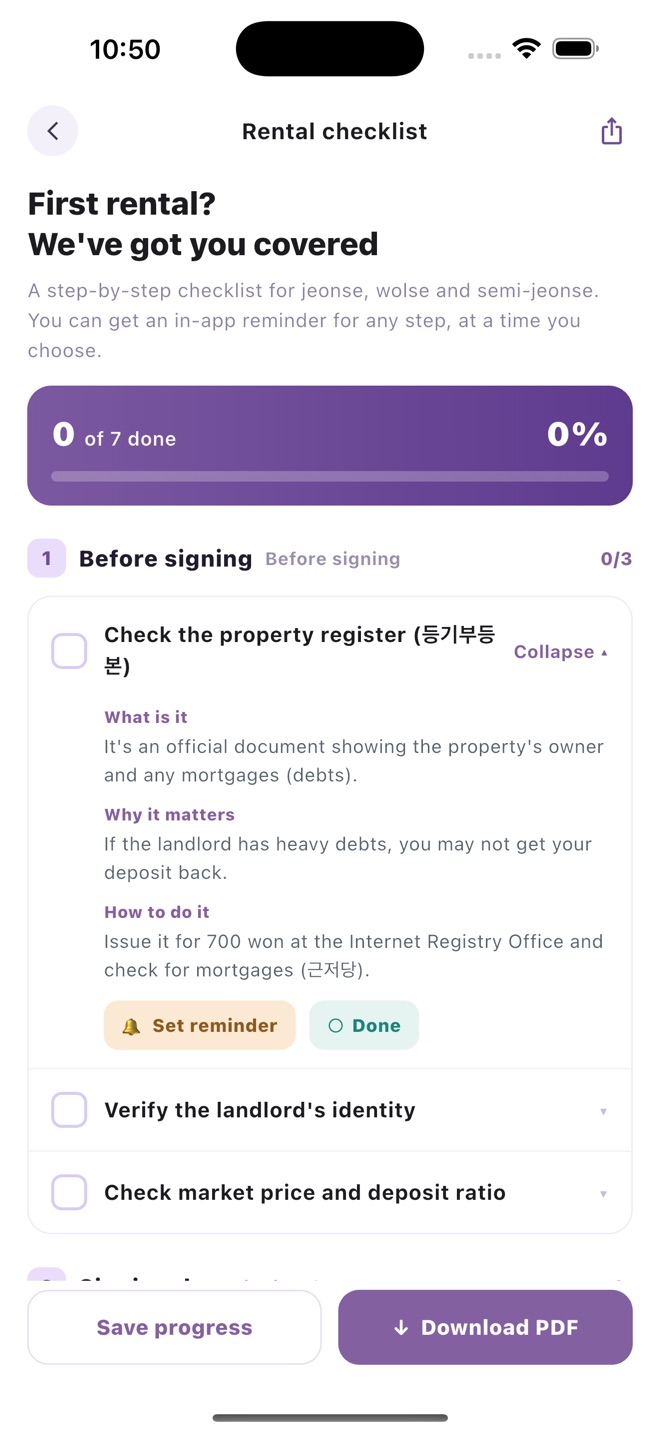
JiiBE는 첫 집 보기부터 입주 당일까지 전 과정을, 진행하며 하나씩 체크하는 체크리스트로 안내합니다.JiiBE walks you through the whole process, from your first viewing to move-in day, as a checklist you tick off as you go.
보증금을 지켜 주는 전입신고와 확정일자처럼 놓치기 쉽고 시기가 중요한 단계는 알림을 설정해 두면 JiiBE가 알맞은 때에 알려 드립니다. 입주 후 한 달이 지나 기억이 생생할 때 집 후기를 남기도록 알림을 설정할 수도 있습니다.For the steps that are easy to miss and time-sensitive, such as the move-in report and fixed-date stamp that protect your deposit, you can set a reminder and JiiBE will notify you at the right moment. You can even set a reminder to review the home a month after moving in, while it is still fresh.
계약 이후 문제가 생겨도, 혼자가 아닙니다.If something goes wrong after signing, you are not on your own.
서명 전 확인만으로는 모든 것을 잡아낼 수 없습니다. 계약 후 임대인이 보증금을 추가로 요구하거나, 반환을 거부하거나, 부당하게 대한다면, 세입자 권리 도우미가 상황을 읽고 그것이 허용되는지, 회원님의 권리는 무엇인지, 취해야 할 구체적인 조치와 어느 한국 공식 기관에 연락해야 하는지를 회원님의 언어로 알려 드립니다. 이는 한국 임대차법에 근거한 참고용 정보이며, 법률 자문이 아닙니다.The pre-signing checks cannot catch everything. If a landlord demands extra deposit after you signed, refuses to return it, or treats you unfairly, the Renter Rights Helper reads your situation and tells you, in your language, whether it is allowed, what your rights are, the concrete steps to take, and which official Korean bodies to contact. It is grounded in Korean rental law, and is informational, not legal advice.
필요한 경우 JiiBE는 알맞은 공식 기관으로 안내합니다. 주택임대차분쟁조정위원회, 대한법률구조공단(132), 국가인권위원회(1331), 그리고 다국어로 지원되는 외국인종합안내센터(1345)가 그 예입니다. 또한 그 행위를 후기에 표시해 다음 세입자에게 알릴 수도 있습니다.When it helps, JiiBE points you to the right official body: the Housing Lease Dispute Mediation Committee, the Korea Legal Aid Corporation (132), the National Human Rights Commission (1331), and the multilingual Foreigner Help Line (1345). You can also flag the behaviour in your review, so the next renter is warned.